
a design research method for water landscapes
This collaborative research reinterprets Alexander von Humboldt’s mobile empirical fieldwork and reimagines the transect as a designerly landscape research tool. Focused on diverse water/land margins in the northern and southern hemispheres, the Travelling Transect aims to support adaptable site design under conditions of climatic, socio-economic and political change.
Method
In the natural and social sciences, the transect is known as a fieldwork method for collecting empirical data. It makes use of the transverse section across a territory, along which points are located for observation and/or measurement. In the natural sciences this form includes scrutiny of the distribution of the object, element, or creature of study, whereas the social sciences aim to reveal community practices along a transect line inscribed across a site of study. Alexander von Humboldt’s science inspires promoting dynamization of the transect method to allow mobile, relational, and open-ended knowledge generation, by adding ‘travelling’ to ‘transect’.
The Travelling Transect fieldwork method presents an alternative approach to current time-short yet distant, big-data-based site analysis, which in the design disciplines is increasingly common to precede the very act of design. The Travelling Transect method appropriates and adjusts Humboldtian ways of rigorously capturing material and immaterial site qualities through fieldwork. The travellers ‘design’ their journeys to encompass field preparations, being in the field and refining field findings, in various acts of ‘thinking together’ pre-, during-, and in post-journey discoveries.
The method consists of the transect travel (which is composed of the itinerary as planned and the deviation as travelled), the cartographic diary (as an ongoing individual record and interpretation between researchers) and the tableau physique (as a co-created time-specific artwork fed from the cartographic diary’s resources and aiming to reach wider audiences post-travel).
Researchers
The Travelling Transect has been developed by Lisa Diedrich and Gini Lee since 2009 in a cross-hemispheric collaboration, involving students, fellow researchers, and stakeholders.
Lisa Diedrich is an independent critic, teaching and researching in the field of contemporary landscape architecture for universities in Europe, North Africa, Australia and Latin America. Since 2025, she has been working as a Professor of Landscape Architecture at the Technical University of Berlin, directing the ÉLAN Chair of Designing Landscapes in the Anthropocene. From 2023 to 2025, she held the Walter Gropius Chair (DAAD) at the Faculty of Architecture, Design and Urbanism of the University of Buenos Aires, Argentina. From 2012 to 2023, she has been a Professor of Landscape Architecture at the Swedish University of Agricultural Sciences (SLU) in Alnarp/Malmö in Sweden. Her research and teaching focuses on landscape design, critical urbanities, site-specific transformation, and transdisciplinary practices. Since 2006 she has served as the editor-in-chief of the book series Landscape Architecture Europe and of ’scape the international magazine for landscape architecture and urbanism.
Gini Lee, a landscape architect, interior designer and pastoralist, has been Professor of Landscape Architecture at the University of Melbourne, and Adjunct Professor at the University of Adelaide. Her academic research and teaching focuses on cultural and critical landscape architecture and spatial interior design theory and studio practices, to engage with the curation and postproduction of complex landscapes. Her multidisciplinary research into the WaterLore of water landscapes of arid territories contributes to the scientific, cultural, and Indigenous understanding of and management strategies for fragile landscapes. Her curation and installation practices experiment with postproduction and Deep Mapping methods to investigate the scientific, cultural, and Indigenous heritage and everyday practices occurring in the landscapes of remote and rural Australia, Scandinavia, global archipelagos, and the arid lands of western USA.
En Route
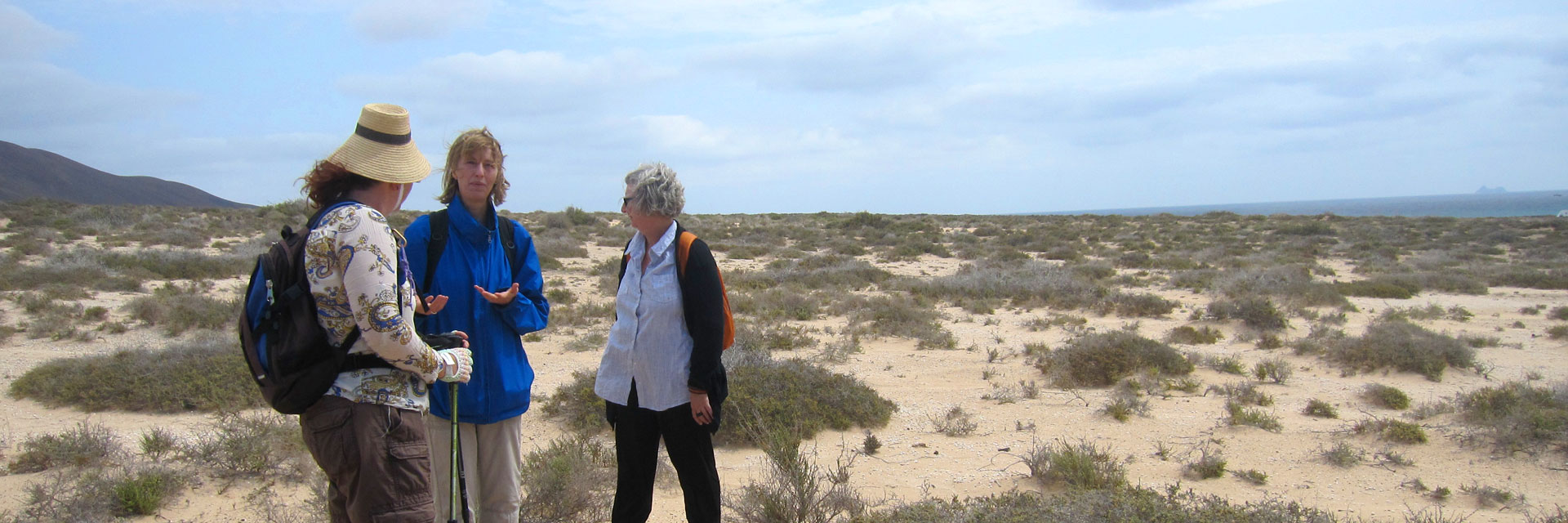
Blog Post Test
Alicimus con reicitio eatemquae ipiet ex et, te porion conetus acilica turionsedi cus, nullendit od qui quo dolenita pelitia que pro beaquid eseque et aut veliat doloreici il et venihilit ea aspitatiis rem illabo. Nam non con nostibus dollecatur, nis ant quibus unt...
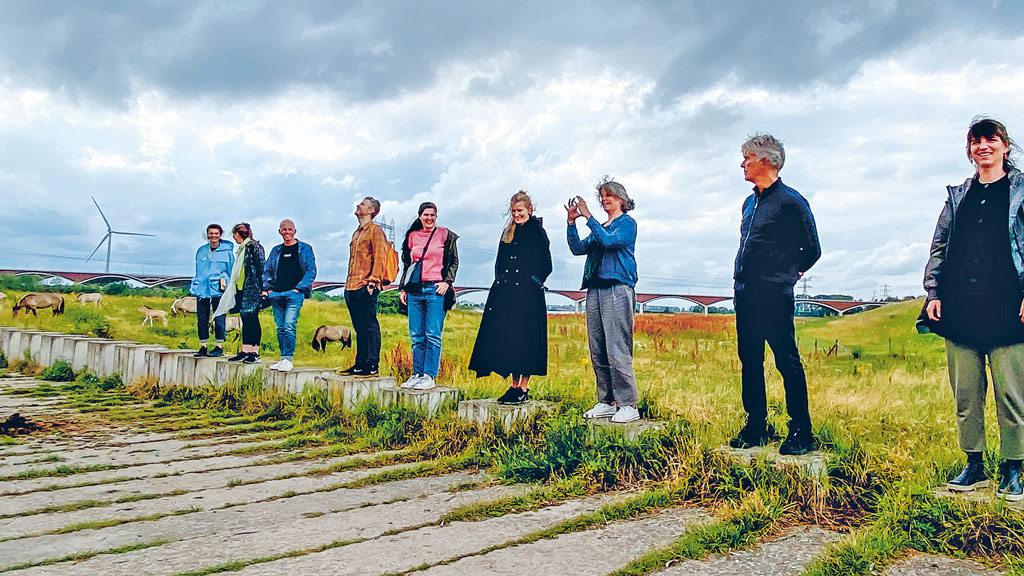
Test 1
sdvsdvadvsdv s fvs dvsdf bbdf sdvdsvsdv d w WVBWrbwrb w rbwrbrwb